
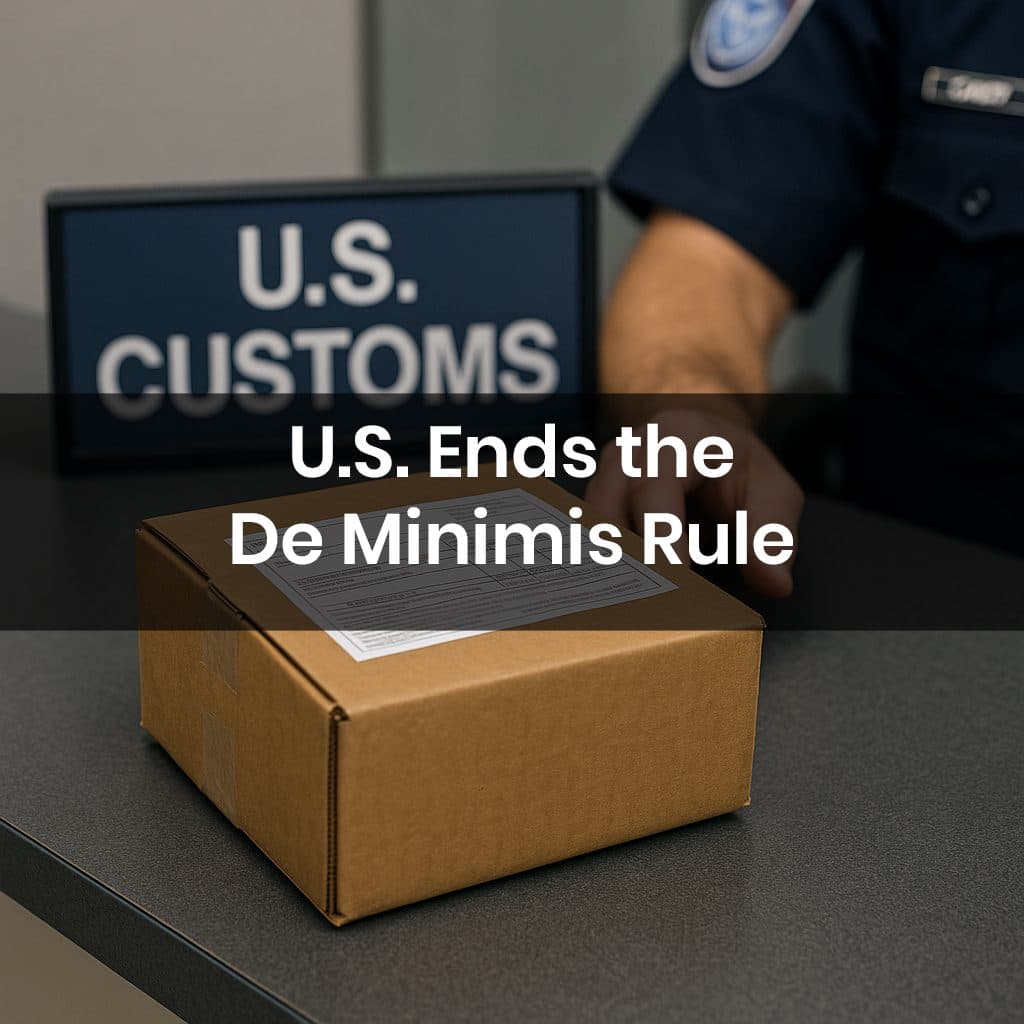
U.S. Ends the De Minimis Rule
Why it matters
- All e-commerce parcels entering the U.S. are now subject to tariffs, ending the long-standing duty-free threshold for orders ≤ $800.
- Some overseas sellers have paused U.S. sales, and multiple foreign postal operators have stopped shipping U.S.-bound e-commerce parcels.
- Parcel carriers (FedEx, UPS, DHL) must collect duties, which may add cost, complexity, and occasional delivery delays.
What changed
- As of Friday, Aug 29, 2025, the U.S. ended the de minimis rule for all countries (the carve-out for China ended earlier in May).
- Tariff amount varies by product category, value, origin country, and whether it moves via postal service or commercial carrier.
- Items with steel, aluminum, or copper parts could incur duties that rival, or exceed, the item price.
What shoppers should expect
- Who pays? Check product pages or terms: sellers may ship “duties paid” (seller covers) or “duties unpaid” (buyer billed).
- Billing timing: carriers may request payment pre-delivery, or invoice after delivery; you can refuse a shipment if unexpected duties arise.
- Gifts remain: personal gifts ≤ $100 can still enter duty-free when sent by friends/family.
Brand & logistics implications
- Some direct-to-consumer brands are relocating inventory into U.S. warehouses to fulfill domestically and avoid per-parcel import duties.
- Examples include fashion and accessories brands shifting stock stateside; others have temporarily paused U.S. orders while they rework logistics.
- Carriers are preparing for added administrative workload and potential consumer confusion during the transition.
What parcel shippers should do
- Educate customers: Proactively communicate duty changes and update checkout systems to display total landed costs (product + shipping + duty).
- Reevaluate fulfillment: Consider moving inventory closer to demand, whether through U.S. warehouses or near-shore hubs, to reduce per-parcel import duties.
- Negotiate contracts: Work with carriers to define how duty collection, billing, and administrative fees are handled.
- Streamline customs processes: Strengthen documentation accuracy and automate classification to minimize clearance delays.
- Enhance transparency: Clearly state whether shipments are “duties paid” or “duties unpaid” to reduce failed deliveries and customer frustration.
- Explore carrier mix: Balance global integrators (UPS, FedEx, DHL) with regional or cross-border specialists who can provide bundled clearance and delivery solutions.
Source: The Wall Street Journal (Sept 2, 2025)
We help parcel shippers navigate the end of the de minimis rule by simplifying duty compliance, cutting costs, and keeping deliveries moving smoothly.
Contact Us Today!