Home / What we do / Modeling and simulation
Supply chain network modeling and simulation
Before you fund a distribution change, you can test it. ebb Logic™ supplies the shipment history and what each order actually cost, and we model the options so you can compare them on cost and delivery time.
What is supply chain network modeling?
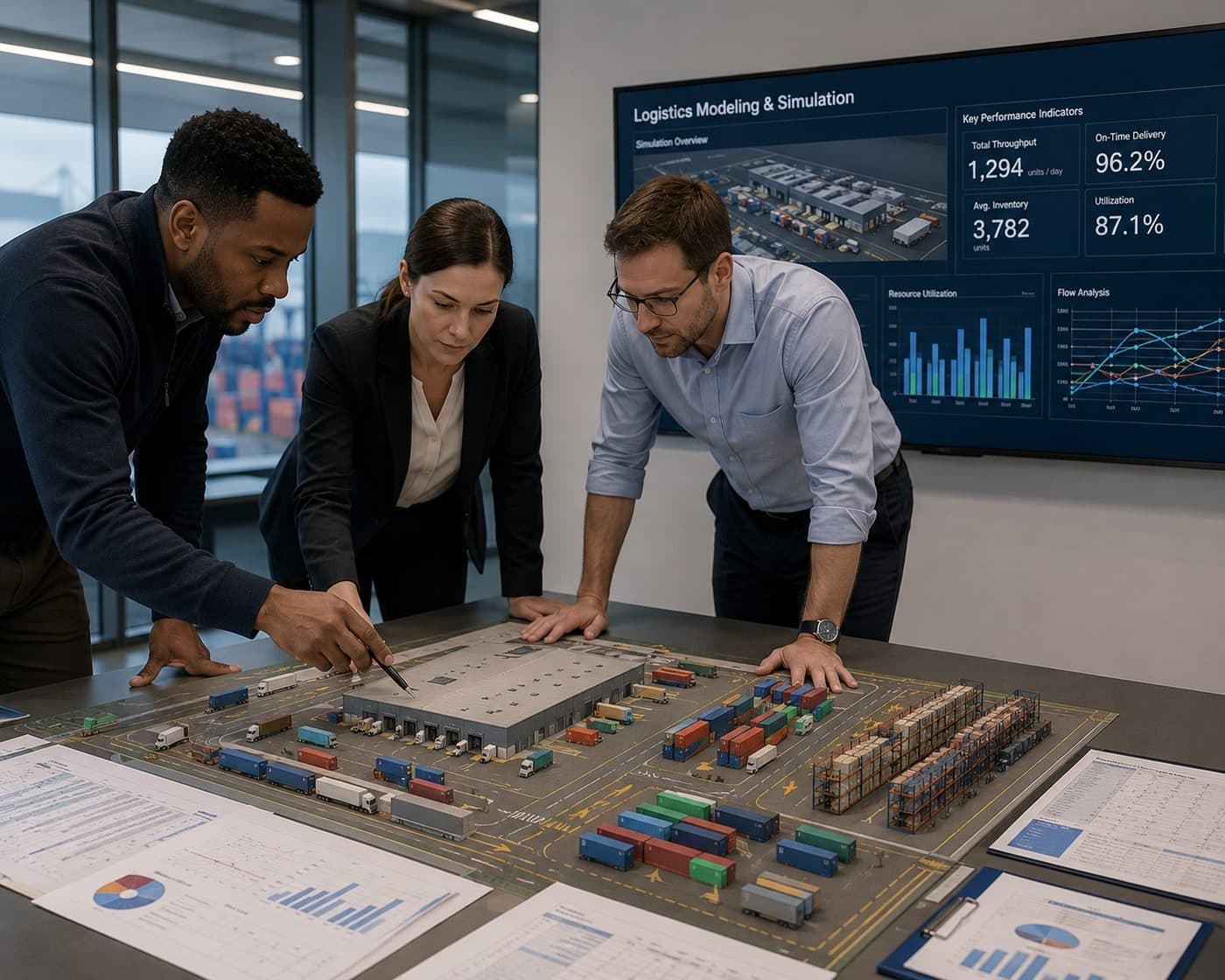
Supply chain network modeling is the process of building a working model of your distribution network from your own demand, transport costs, facility costs and service requirements, then comparing the options on total landed cost and delivery time. It lets you test a decision such as adding a site or moving inventory against real order data before you fund it, instead of finding out afterward.
We model your distribution network so a decision like adding a site or moving inventory is tested before it is funded.
Test distribution changes before committing to them.
Opening a distribution center, moving inventory or changing shipping routes affects both cost and service. Modeling lets you compare those effects before committing.
The model can focus on a specific question, such as whether a second location would pay for itself, where it should be, and how it would affect delivery times.
ebb Logic™ supplies the order destinations and what each shipment actually cost. We build the comparison on that and show the assumptions behind every result.
What makes this different.
Based on your delivery locations
Demand in the model is your real shipment destinations from ebb Logic™, not population centers or a regional average.
Cost and service compared together
Each scenario includes total costs and expected transit times, so you can weigh savings against delivery requirements.
Scoped to the decision
We build the model around the decision you need to make and the level of detail it requires.
How this actually runs.
Build the model
We build your current network into the model from ebb Logic™ data: demand, transport costs and service requirements. Then we check the model reproduces what you actually spent.
Weeks 1–2Run the scenarios
We compare location, capacity and routing options by total cost and delivery performance.
Week 3Test changes in demand and cost
We test the leading options against growth, shifts in demand, rate changes and peak volume.
Week 4
Questions shippers ask first.
How do we know whether a second distribution center pays for itself?
What data do you need for a network model?
How long does a network study take?
Do we need to buy network optimization software?
Related work.
Warehousing
Warehouse and fulfillment partner sourcing, evaluated against your order profile and outbound shipping economics.
For shippers outgrowing their current footprint02Shipping analytics
ebb Logic™ brings UPS, FedEx, DHL and LTL data into one shipping analytics portal. Track spend, surcharges, cost per package, dimensional weight, freight class and transit. We use that data to recommend changes and notify your team when costs or performance need attention.
For teams making network, packaging or carrier decisions03Engineering services
We measure your order and throughput data, then design facility layout, slotting and material handling around what it shows.
For operations planning a move, an expansion, or an automation decisionRequest a free contract review.
Send your agreement for a written review of potential savings and recommended next steps.
Or call 888-356-4421
Free, and no obligation. A written evaluation back inside 48 hours. No fee unless we find documented savings. How we handle your documents
- Your current agreement, any carrier
- One recent invoice, if you have one
- A written evaluation back inside 48 hours