
FedEx Sues the U.S. Government Over Tariff Refunds.
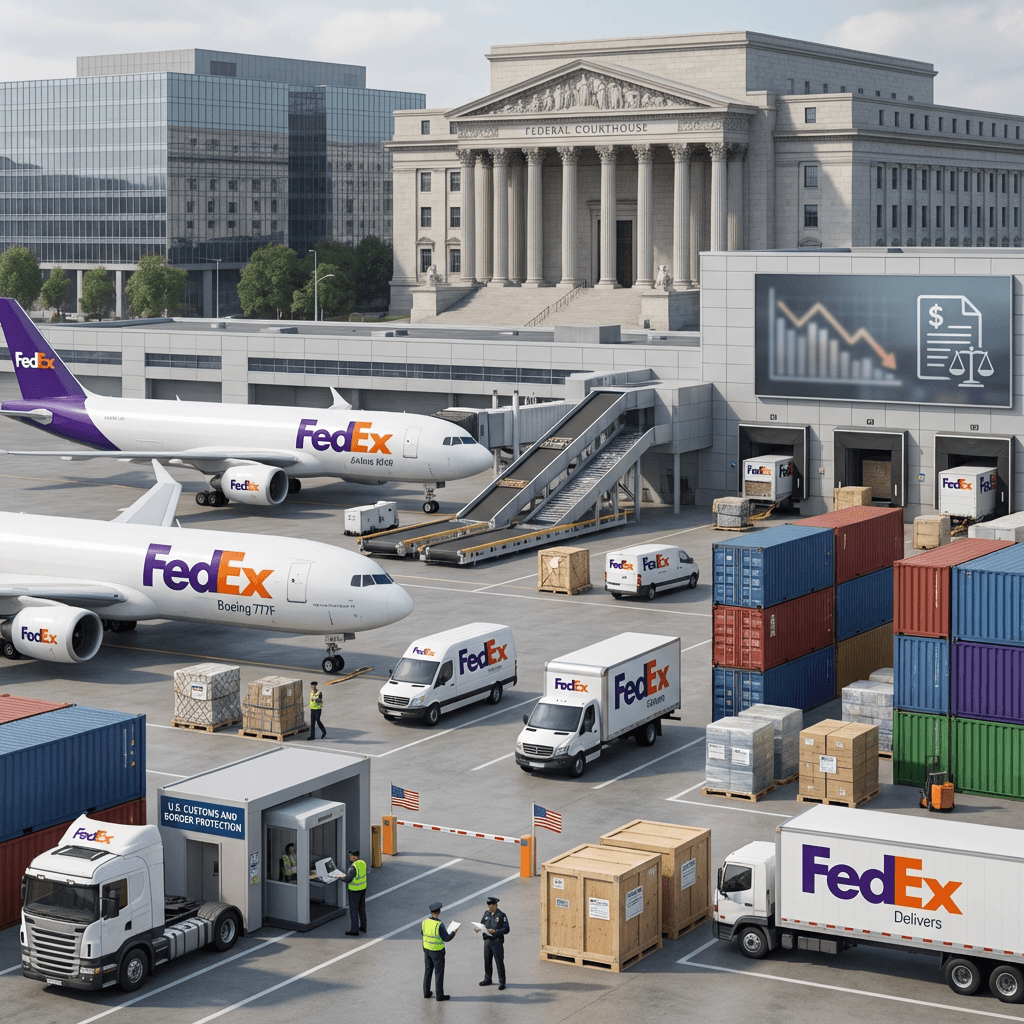
FedEx has filed a lawsuit against the U.S. government seeking refunds of tariffs paid under a trade program that was later ruled unlawful by the Supreme Court. The case centers on tariffs imposed during the Trump administration using the International Emergency Economic Powers Act, known as IEEPA.
FedEx filed its complaint in the U.S. Court of International Trade and named the federal government and U.S. Customs and Border Protection as defendants.
Background of the Lawsuit
The dispute stems from tariffs imposed under IEEPA, a law intended to address national emergencies. The Supreme Court ruled in 2024 that the administration exceeded its authority by using IEEPA to impose broad tariffs without congressional approval. The Court invalidated the tariffs but did not automatically order refunds.
FedEx argues it paid significant duties as an importer of record and is now entitled to a full refund.
Source: Fox Business
Why FedEx Is Suing Now
The Supreme Court ruling opened the door for companies to pursue refunds through the courts. FedEx’s lawsuit seeks to recover tariff payments rather than accept the ruling as purely prospective.
FedEx claims the tariffs caused direct financial harm and that the government lacks legal grounds to retain the collected duties.
Source: Associated Press
Key Legal Argument
The central argument is simple. Only Congress has the authority to impose tariffs. The executive branch acted beyond its legal power. As a result, the tariffs were unlawful from the start, not merely invalid going forward.
FedEx maintains that unlawfully collected tariffs must be returned to affected companies.
Source: Financial Times
Potential Industry Impact
FedEx is not alone. Other large corporations have also filed or signaled plans to file similar refund claims. This case could set precedent for how courts handle tariff refunds after executive overreach.
If FedEx prevails, it could trigger a wave of claims from importers across multiple industries, including retail, manufacturing, and logistics.
Source: CBS News
What This Means Going Forward
The lawsuit underscores growing legal scrutiny of trade policy decisions made without congressional approval. It also highlights the financial exposure companies face when regulatory actions change after the fact.
For parcel carriers and global shippers, the case reinforces the importance of monitoring trade policy, importer of record status, and tariff liability.
Takeaway
The outcome could reshape how future tariffs are imposed and how companies respond when those tariffs are later ruled unlawful. That dollar amount represents 16% of total earnings for the prior fiscal year.