Speed to Delivery Race
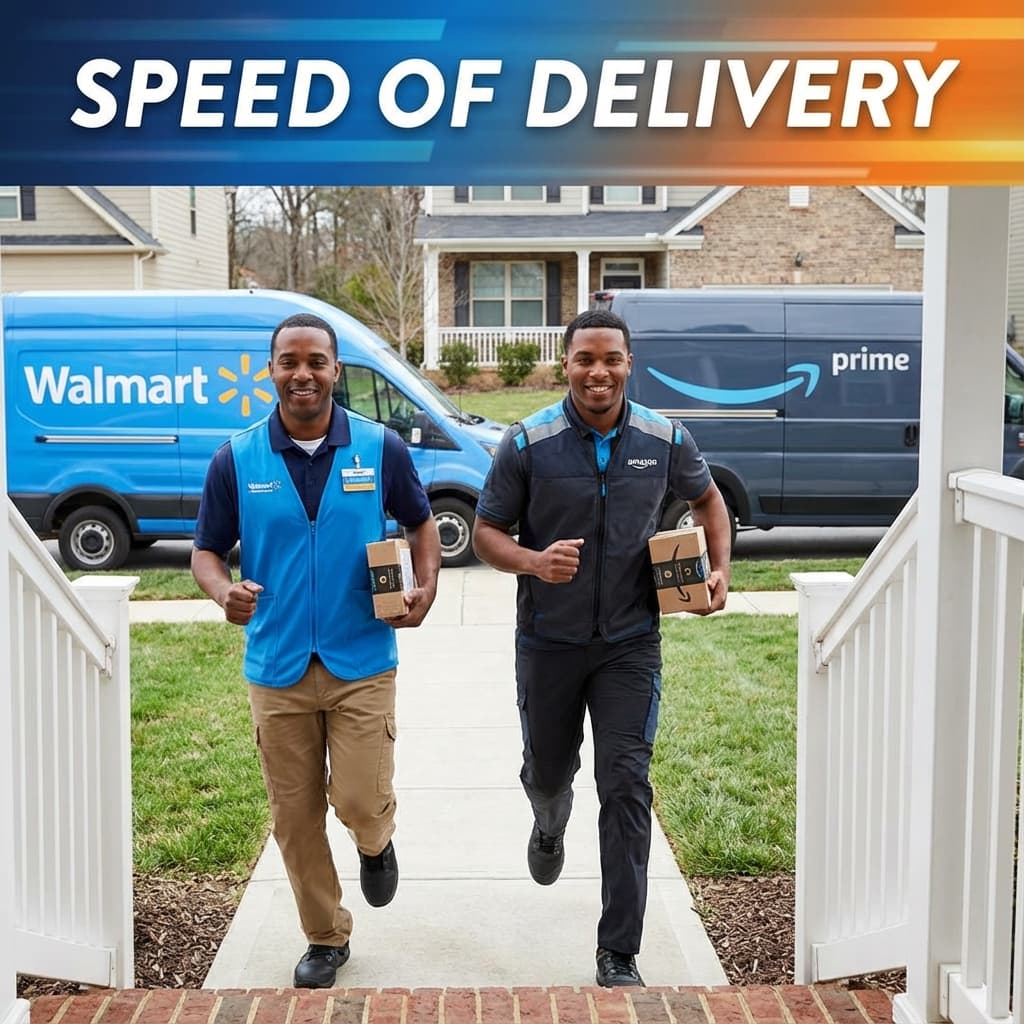
The battle for ultra-fast delivery just intensified. On December 1, Amazon revealed that it is testing 30-minute delivery in two major markets, Seattle and Philadelphia. While this move may sound like a natural evolution for a company known for pushing the boundaries of logistics, it comes at a time when Amazon is actually losing ground in one of the areas where it once dominated: speed.
The Reason?
The reason? Walmart is quietly, and quickly, becoming the most formidable player in fast fulfillment.
Walmart’s Surge in Fast Delivery
Over the past several quarters, Walmart has delivered a performance that has reshaped expectations for same-day delivery across the U.S. Their recent results show a company leveraging both its physical footprint and fulfillment strategy with precision:
- 28% U.S. ecommerce growth in Q3
- Seven consecutive quarters of 20%+ ecommerce growth
- Delivery in under 3 hours available to 95% of U.S. households
- 70% growth in sub-3-hour delivery volume
- 35% of all store-fulfilled orders arrive within three hours
- Under-1-hour delivery is now Walmart’s fastest-growing fulfillment channel
- Customer satisfaction and net promoter scores have hit new highs
Walmart’s approach is resonating with shoppers, and that success is creating pressure on Amazon to adapt.
Why Amazon Is Testing 30-Minute Delivery
With Walmart gaining momentum, Amazon’s new pilot appears less like an experiment and more like a strategic counterpunch. Its goal is clear:
defend its leadership position in customer convenience and delivery speed.
While details are limited, the test mirrors a trend already emerging at Walmart:
delivery fees that vary by time window, encouraging customers to prioritize speed, or save money by selecting slower options.
What This Means for the Consumer
Regardless of who wins the race, shoppers benefit from the competition. Each rivalry milestone delivers more advantages to consumers:
- Broader product availability
- Faster and more flexible delivery options
- Greater convenience
- Increased value for their money
But beyond the consumer experience, there’s a deeper story unfolding, one that should have the full attention of parcel shippers.
What 30-Minute Delivery Signals for Parcel Shippers
The showdown between Amazon and Walmart isn’t just about ecommerce dominance, it’s a sign of shifting logistics expectations across the entire supply chain.
Here’s what parcel shippers should take away:
1. The Standard for “Fast Delivery” Is Changing
Same-day delivery used to be a premium offering. Now, under-3-hour delivery is becoming normalized, and under-1-hour delivery is growing rapidly. Parcel shippers must prepare for a world where customers expect near-instant fulfillment, not simply 2-day shipping.
2. Speed Is Being Enabled by Localized Fulfillment
Both giants are relying on local inventory positioning, Walmart through stores, Amazon through micro-fulfillment hubs.
Shippers should evaluate:
- Urban fulfillment nodes
- Regional carrier networks
- Store-based delivery (if applicable)
- Inventory segmentation closer to demand
This trend may reduce reliance on long-haul parcel networks for certain SKUs.
3. Cost Pressures Will Increase
Ultra-fast delivery is expensive, so expect:
- More delivery fee tiers
- Higher pressure on carrier negotiations
- Increased demand for efficient packaging, zone skipping, and density optimization
Carriers may also adjust their rate structures as same-day volume grows.
4. Regional Carriers Gain Relevance
Thirty-minute and one-hour delivery windows require local networks that national carriers don’t always offer. This opens opportunities for:
- Regional parcel carriers
- Crowdsourced delivery networks
- Hybrid last-mile solutions
Shippers who diversify early may gain a cost and flexibility advantage.
5. Customer Experience Will Become a Differentiator
Fast shipping on its own isn’t enough anymore, customers want:
- Accurate ETAs
- Real-time tracking
- Delivery preference options
- Clear communication
Those who don’t enhance their delivery experience will fall behind.
The Bottom Line
The fast-delivery race is accelerating. Walmart is setting the pace. Amazon is responding.
And while the competition benefits the customer, it also sends a clear message to parcel shippers:
Speed, flexibility, and last-mile optimization are no longer optional, they are strategic imperatives.
As consumer expectations evolve, so must your logistics strategy. The companies that adapt now will be the ones leading, not chasing, the next era of ecommerce fulfillment.
How ebb Logistics Can Help
Ebb Logistics partners with companies of all sizes to navigate these fast-changing delivery expectations. As Walmart and Amazon redefine “fast,” shippers need guidance rooted in data, negotiation expertise, and real-world industry insight.
Here’s how ebb Logistics supports your success:
- Data-Driven Carrier Analysis: We evaluate your current parcel contracts to determine whether you’re receiving competitive, market-aligned rates, even as carriers shift pricing to match rising speed demands.
- Strategic Negotiations: With ultra-fast delivery increasing costs, our negotiation expertise helps ensure you’re not overpaying for the service levels your customers expect.
- Network Optimization: We help you explore regional carriers, hybrid last-mile options, and density optimization strategies that lower costs while improving speed.
- Scenario Modeling: As expectations move toward sub-3-hour and under-1-hour delivery, we model fulfillment and transportation strategies that keep you competitive.
- A True Silent Partner: With a 100% client retention rate, Ebb Logistics works behind the scenes to strengthen your relationships, your service levels, and your bottom line.
In a world where delivery speed is becoming a key differentiator, ebb Logistics ensures your business stays ahead of the curve, efficiently, strategically, and confidently.