Amazon Fuel Surcharge Signals Rising Costs
The short version
- Fuel surcharges are expanding beyond traditional carriers
- Amazon is aligning its pricing strategy with UPS and FedEx
- New cost layers are hitting fulfillment and last mile simultaneously
- Surcharges can change quickly and lack long-term visibility
- Sellers control how much cost passes to consumers
Amazon just added a new cost layer to its fulfillment network. A 3.5 percent fuel surcharge will hit third-party sellers this month. This is not isolated. It reflects a broader shift across parcel carriers. Costs are rising fast, and carriers are moving quickly to protect margins.
Amazon will apply a 3.5 percent fuel surcharge starting April 17 for sellers using Fulfillment by Amazon. The fee expands to Buy with Prime and Multi Channel Fulfillment on May 2.
The surcharge averages about $0.17 per unit. It varies based on package size and weight. Amazon states the fee is tied to fulfillment costs, not item price.
Source: WSJ
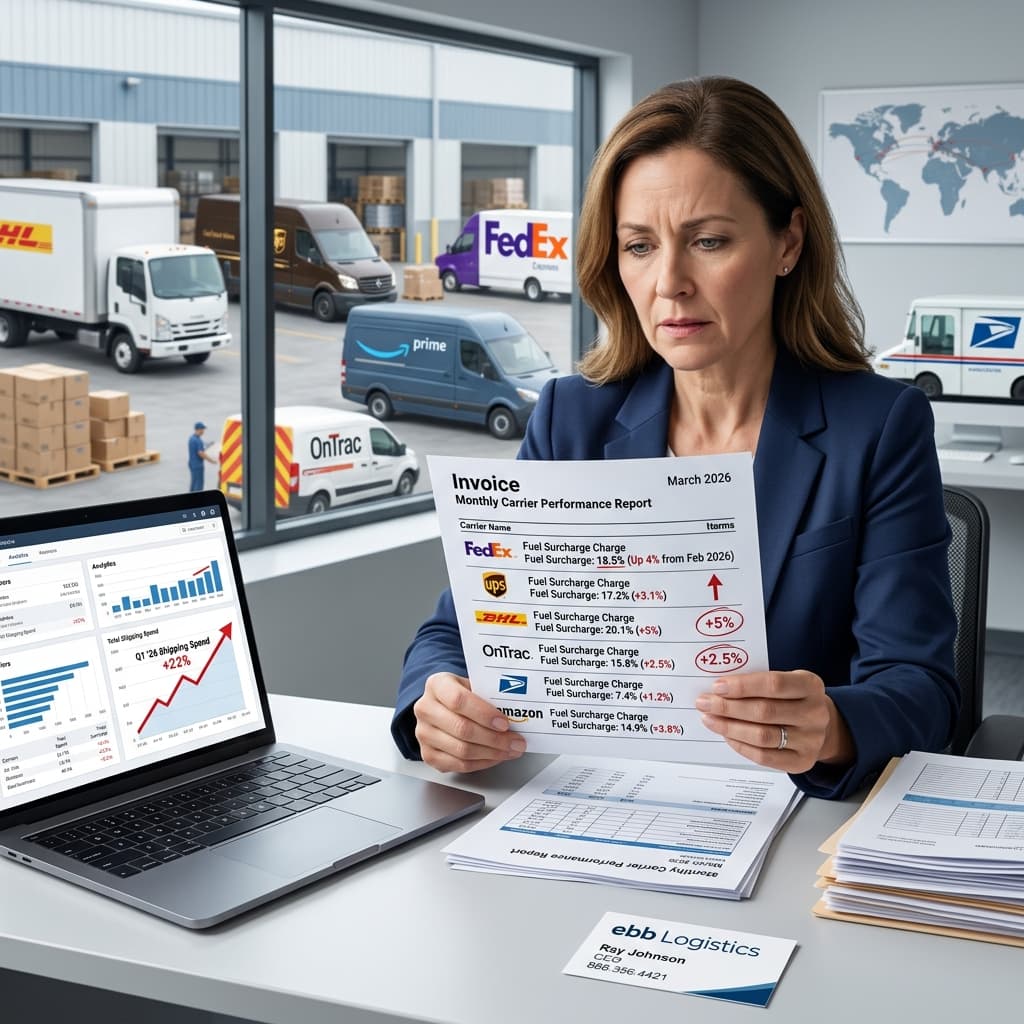
This follows similar moves across the market. UPS and FedEx continue to adjust fuel surcharges weekly. USPS recently announced its first-ever 8 percent package fuel surcharge.
Amazon had previously absorbed these costs. That has now changed. There is no defined end date for the surcharge.
Key Takeaways
- Fuel surcharges are expanding beyond traditional carriers
- Amazon is aligning its pricing strategy with UPS and FedEx
- New cost layers are hitting fulfillment and last mile simultaneously
- Surcharges can change quickly and lack long-term visibility
- Sellers control how much cost passes to consumers
What This Means for Parcel Shippers
Cost pressure is accelerating across every channel. This is no longer just a UPS and FedEx issue. Amazon is now actively managing margin through surcharges.
Next, cost predictability is declining. Fuel surcharges move faster than base rates. That makes forecasting more difficult.
Also, total landed cost is rising without clear warning. Even small per unit increases scale quickly across volume.
Finally, pricing power is shifting. Carriers and fulfillment providers are standardizing surcharge strategies. This reduces shipper leverage over time.
What Shippers Should Do Next
- Audit all surcharge exposure across carriers and fulfillment partners
- Model total landed cost across Amazon, UPS, FedEx, and USPS
- Identify where surcharge structures differ and create cost gaps
- Diversify carrier strategy to reduce dependency on any single network
- Revisit contracts to address fuel surcharge exposure and variability
How ebb Logistics Can Help
ebb Logistics helps shippers break down total cost across every network.
- We identify hidden surcharge exposure and quantify real impact.
- We build carrier strategies that reduce reliance on any one provider.
- We also support contract negotiations that reflect current market conditions.
- We improve your relationship with your carrier in the long run.
If your costs are rising without clear explanation, we can isolate the drivers and create a plan to control them.