
Amazon & USPS Delivery Deal Signals New Shift in Last Mile Strategy
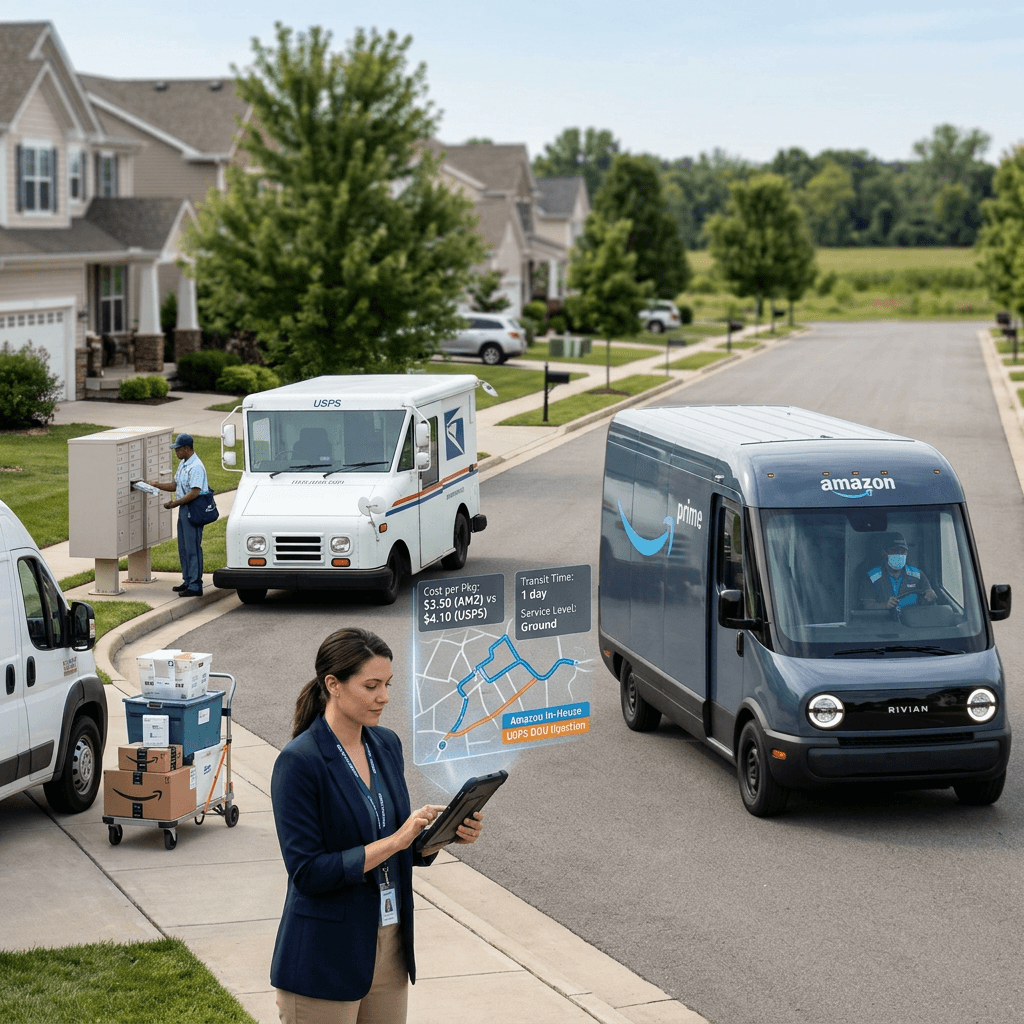
The Amazon USPS delivery deal marks another shift in how last mile delivery is structured. Amazon continues to expand its logistics control while still using external partners where it makes sense. In this case, the United States Postal Service will handle certain delivery segments for Amazon packages, particularly in areas where USPS already has strong coverage.
Amazon has spent years building its own delivery network. It now handles a large share of its own volume. Even so, it still relies on partners like USPS to fill gaps, manage cost, and maintain coverage across rural and lower density markets. This agreement reinforces that hybrid approach.
For USPS, the deal brings additional package volume. The agency has been under financial pressure and is actively looking for revenue sources. Partnering with Amazon helps stabilize volume, especially as traditional mail continues to decline.
This is not a return to the old model where USPS handled a majority of Amazon deliveries. It is more targeted. Amazon is selective. It uses USPS, where it improves efficiency and reduces costs, while maintaining control over higher-density, more profitable lanes within its own network.
Source: WSJ
How This Impacts Parcel Shippers:
This development highlights a key reality. The carrier landscape is fragmenting, and control is shifting toward large networks like Amazon.
- Cost structure will continue to evolve. Amazon is using partners like USPS to optimize cost in specific lanes. That means pricing across the market will become more segmented. Shippers should expect less consistency and more variability by region and service level.
- Service reliability will vary by geography. USPS performs well in certain last-mile scenarios, especially in rural delivery. In other areas, transit times and consistency can fluctuate. Amazon will route volume based on performance and cost, not uniform service standards.
- Transit times may become less predictable. Hybrid networks introduce more handoffs. Each handoff increases the risk of delay. Shippers that rely on single-carrier assumptions may see performance gaps.
- Operational risk is increasing. Amazon is no longer just a customer of carriers. It is a competitor. As it builds its own network and selectively partners with others, it reshapes capacity and pricing dynamics across the industry.
This also reinforces a broader trend. No single carrier strategy is sufficient anymore. The market is moving toward multi-carrier, lane-specific optimization.
What Parcel Shippers Should Do Next:
- Audit your current carrier mix. Identify where you are over dependent on a single provider.
- Model total landed cost by lane. Include USPS, regionals, and alternative carriers where applicable
- Monitor service performance by geography. Do not assume uniform transit times across your network
- Revisit contract terms. Focus on accessorial controls, fuel exposure, and performance incentives
- Build a flexible routing strategy. Align shipments to the most cost effective and reliable carrier by lane
How ebb Logistics Can Help:
ebb Logistics helps shippers navigate shifts like the Amazon USPS delivery deal with data driven strategy and contract expertise. We identify cost exposure, optimize carrier mix, and protect service performance.
Contact ebb Logistics today for a no cost evaluation of your current shipping strategy.