
Cyber Week Delivery Performance Was Strong, But Parcel Shippers Can’t Let It Create Complacency
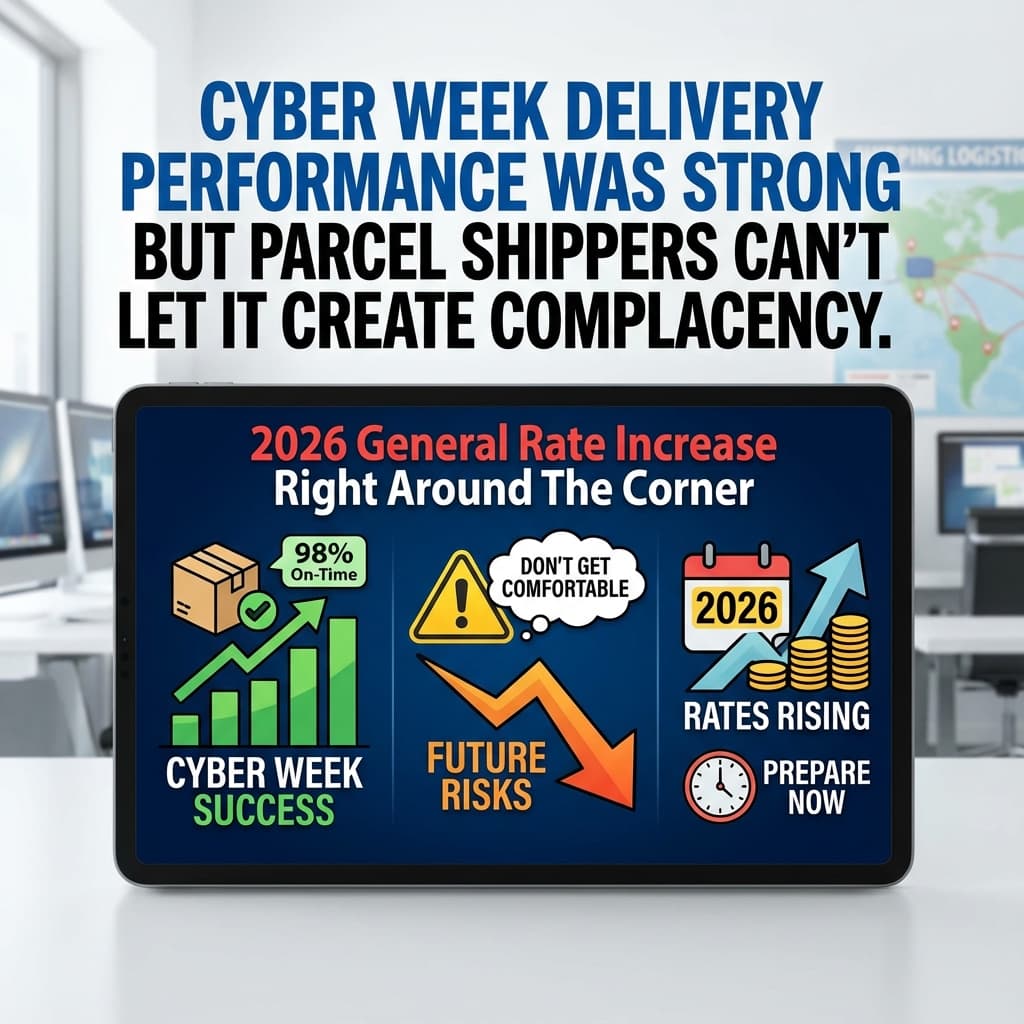
Peak-season execution in early December delivered a positive signal for ecommerce brands: the major parcel networks handled Cyber Week volume with exceptionally high on-time performance. But strong service doesn’t eliminate a shipper’s biggest near-term risk, cost. With the 2026 General Rate Increases (GRIs) approaching, now is the moment to prepare, not after carrier updates hit your invoices.
What ShipMatrix Reported
According to a ShipMatrix analysis of millions of parcels shipped during Cyber Week (December 1–6, 2025), on-time performance remained very high across the national carriers: FedEx at 98.3%, UPS at 98.9%, and the Postal Service at 97.2%. These results were delivered while the industry moved more than 568 million parcels, roughly 30% higher than off-peak volumes, showing carriers planned effectively for the surge.
Source: Shipmatrix
The Hidden Message for Parcel Shippers
When service levels are this strong, it’s easy for shippers to assume “everything is fine.” But peak OTP is only half the story. The other half is what happens to your transportation spend when 2026 GRIs and accessorial updates land, especially if your network is overweight in premium services, residential deliveries, or surcharge-prone packages.
Why This Matters Heading Into 2026 GRIs
High on-time delivery performance can mask structural cost issues: misaligned service selection, avoidable surcharges, DIM exposure, and contract terms that no longer reflect market conditions. GRIs tend to amplify those problems, turning small inefficiencies into meaningful margin erosion.
Action Plan: What to Do Before the 2026 GRI Hits
- Model your GRI exposure now: Forecast the expected increase across your top lanes, weights, and service levels and identify the “cost hotspots” first.
- Audit surcharge risk: Residential, DAS/EDAS, Additional Handling, Large Package, and address correction-type fees often outpace base-rate changes.
- Rebalance your service mix: Don’t overpay for speed you don’t need. Tighten rules at checkout and align promised delivery dates with the lowest-cost service that meets them.
- Pressure test your carrier strategy: Validate whether a multi-carrier approach (including regional options where relevant) can protect service while reducing cost volatility.
How ebb Logistics Helps Parcel Shippers Stay Ahead
ebb Logistics partners with parcel shippers to turn carrier changes into a strategic advantage, before they hit the P&L. We help you:
- Benchmark your rates against market conditions and identify gaps in your current agreements.
- Quantify true cost drivers by analyzing base rates, surcharges, DIM impact, and accessorial trends.
- Build a 2026-ready strategy with scenario modeling that protects service levels while reducing spend.
- Negotiate with confidence using data-backed leverage, lane-level insights, and clear performance objectives.
Bottom Line
Cyber Week performance was a win for the industry, but cost pressure is still coming. Use this window of operational stability to prepare for the 2026 GRI cycle: model the impact, fix surcharge leakage, optimize service selection, and ensure your contracts reflect today’s market. If you wait until the GRI is active, you’re already behind.