
UPS RFID Technology Rollout Signals a New Standard for Package Visibility
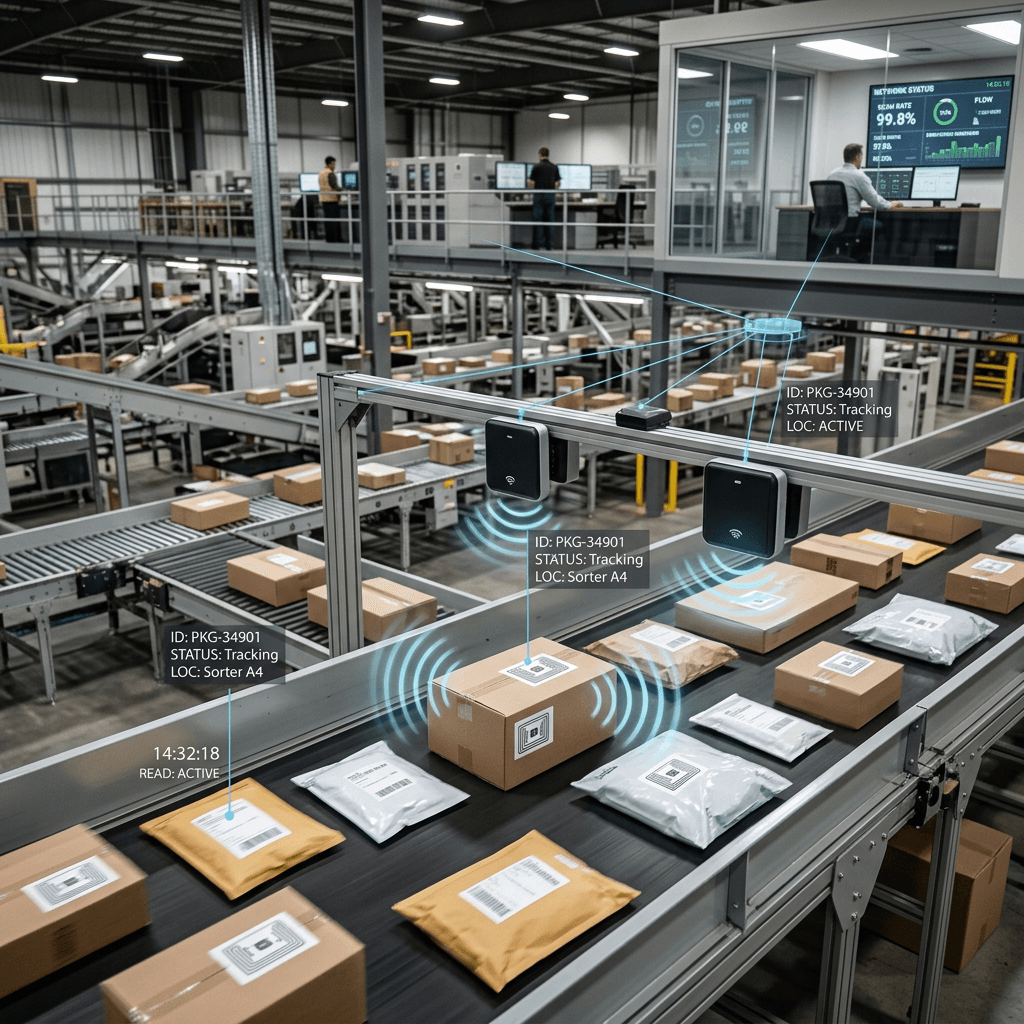
The latest update around UPS RFID technology marks a structural shift in how packages move through the network. UPS is expanding the use of RFID, radio frequency identification, across its operations to improve tracking accuracy and reduce manual handling.
Instead of relying on traditional barcode scans, RFID allows packages to be identified automatically as they move through facilities and vehicles. Fixed readers and mobile scanning systems capture package data in real time without requiring a physical scan at each touchpoint.
UPS has already deployed this technology across thousands of locations. The company reports that RFID is eliminating millions of manual scans each day. That reduces labor dependency and increases processing speed inside hubs and sortation centers.
The real value sits in visibility. RFID creates more frequent data points as packages move through the network. That leads to better tracking accuracy and fewer gaps in shipment status updates.
This is not just an operational upgrade. It is part of a broader push toward automation and network efficiency. UPS is building a system where data flows continuously without requiring human input at every step.
Source: UPS
How This Impacts Parcel Shippers
UPS RFID technology changes how performance, cost, and service reliability will behave going forward.
- Expect improved tracking accuracy. More data points reduce the likelihood of missed scans or lost packages in transit. This helps shippers manage customer expectations and reduce WISMO inquiries.
- Processing speed improves. Automated identification allows packages to move faster through hubs. This can lead to more consistent transit times, especially during peak periods when manual scans create bottlenecks.
- Labor costs inside the carrier network decrease. Fewer manual scans mean fewer touchpoints. Over time, this improves UPS operating efficiency. However, those savings do not automatically translate into lower shipper rates. Carriers tend to reinvest efficiency gains into margin expansion.
- Service consistency should improve in high volume lanes. RFID reduces variability tied to human error. That creates a more stable delivery network, particularly in automated facilities.
- Strategic implication. As UPS builds a more automated network, it increases the performance gap between itself and smaller carriers that lack similar infrastructure. That can shift leverage in certain markets, especially where service reliability becomes a deciding factor.
- Increased data visibility gives UPS more control over its network. Better data allows for tighter operational decisions around routing, capacity, and pricing. That can influence how contracts are structured and enforced.
What Parcel Shippers Should Do Next
- Audit your tracking performance. Identify where visibility gaps still exist across your carrier mix
- Reevaluate service commitments. Align delivery promises with improved carrier performance where it is proven
- Benchmark UPS against other carriers. Do not assume improved technology equals best fit for every shipment
- Review contract language. Focus on service guarantees, scan compliance, and performance metrics
- Strengthen multi carrier strategy. Do not rely on a single carrier, even as technology improves
How ebb Logistics Can Help
ebb Logistics helps shippers translate carrier changes like UPS RFID technology into actionable strategy. We evaluate performance, benchmark contracts, and build carrier strategies that protect cost and service.
Contact ebb Logistics to identify where these network changes create opportunity in your operation.