
USPS is quietly repricing complexity
The short version
- USPS rate changes don’t hit every shipper the same way. ebb helps parcel shippers model the July 2026 changes before they reach invoices, DIM exposure, Ground Advantage impact, Parcel Select shifts, hazmat risk. We also benchmark USPS against UPS, FedEx, regionals, and consolidators to sharpen carrier leverage.
USPS is quietly repricing complexity. July 12 is when the bill arrives.
New dimensional weight rules. New hazmat fees. A flatter Ground Advantage table. Most shippers won’t see it on the rate sheet, they’ll see it on the invoice.
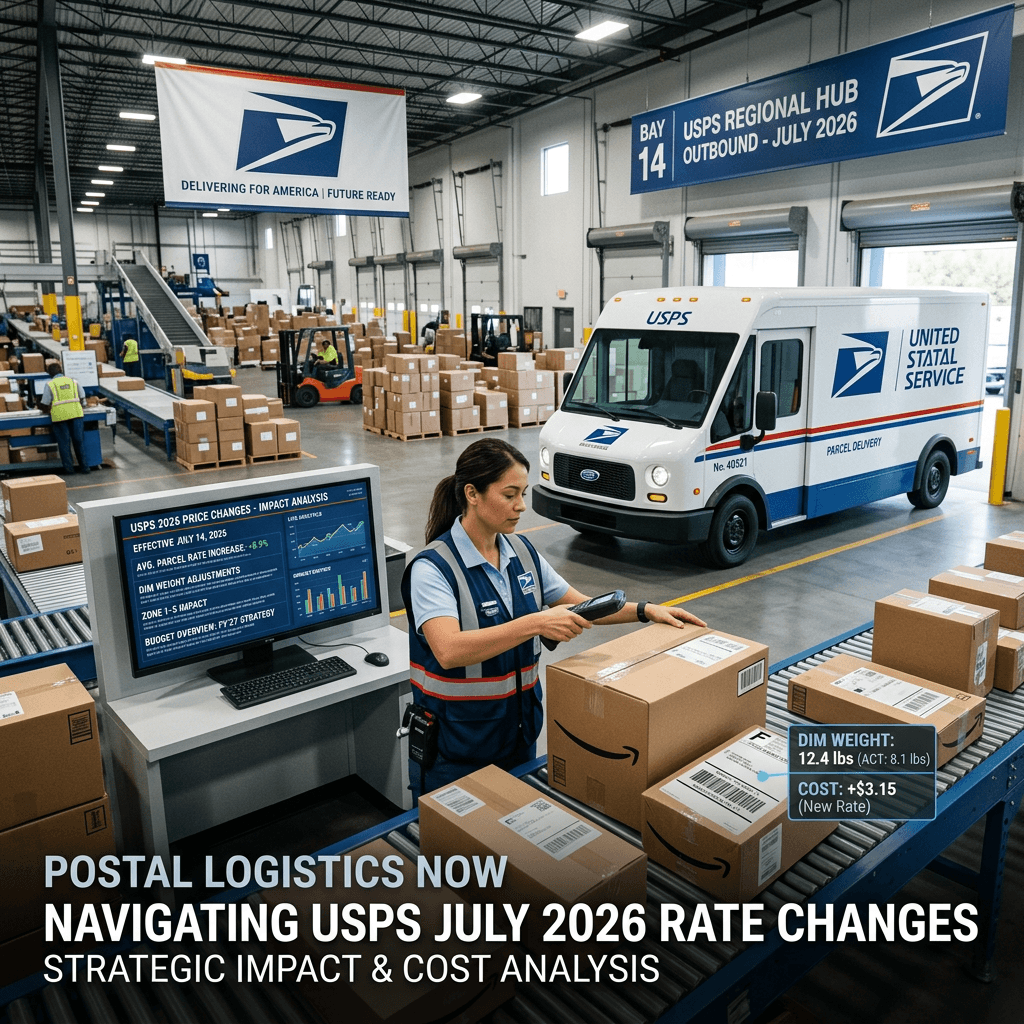
USPS filed notice with the Postal Regulatory Commission on May 11, 2026. If approved, the changes take effect July 12, 2026. The structural shifts buried inside matter more than the headline rates.
§ 01, TimelineFrom filing to invoice
§ 02, What’s changingFour moves, one strategy
This isn’t a simple rate hike. USPS is repricing space, compliance risk, and complexity. Each lever hits different shippers differently.
§ 03, Dimensional weightThe change with the longest tail
USPS is aligning its dimensional weight divisor with industry standards across Priority Mail Express, Priority Mail, Ground Advantage, and Parcel Select. Translation: bulky, lightweight parcels get more expensive, sometimes dramatically.
DIM pricing charges shippers for the cube a package occupies, not just what it weighs. Tighter divisors convert more cubic inches into more billable pounds. Loose or oversized packaging will quietly raise per-parcel cost.
§ 04, Hazmat & complianceA new cost layer
USPS is adding two new fee structures for hazmat shippers: a handling fee on Priority Mail Express and Priority Mail, plus a noncompliance fee triggered when packaging, labeling, or documentation falls short, across all competitive package products.
Carriers are monetizing complexity. Weight, cube, compliance, and address quality now carry pricing consequences they didn’t five years ago.
§ 05, Impact matrixWho feels it, how hard
Your July 12 math depends on package mix, weight band, hazmat exposure, and whether you’re on published or negotiated rates. Find your row.
| Shipper profile | DIM divisor change | Ground Advantage ounce removal |
New hazmat fees | PO Box 3% increase |
|---|---|---|---|---|
| Bulky / lightweight ecomm | High | Medium | Low | |
| Dense / heavy goods | Low | Low | Low | |
| Hazmat / regulated | Medium | Low | High | Low |
| Published-rate users | Medium | High | Medium | Medium |
| Negotiated commercial | Medium | N/A | Medium | Low |
| Lightweight first-mile | Low | High | Low |
§ 06, Ground AdvantageThe ounce-based shift
USPS is removing ounce-based rate differences for published Commercial Ground Advantage prices. The result: a simpler, flatter table, but less precise. Light-band shippers lose granular cost control.
USPS says this change does not affect customers on negotiated commercial Ground Advantage rates. If you’re on published rates, model your light-band exposure now.
§ 07, Address qualityData becomes a cost lever
USPS is launching the Addresses API under its Address Management System. The signal: data quality is now a cost lever, not back-office hygiene. Bad addresses create undeliverables, reattempts, and surcharges, all of which carriers are pricing closer to the surface.
§ 08, Key takeawaysThe ten things to remember
Don’t wait for the invoice to learn what changed.
USPS rate changes don’t hit every shipper the same way. ebb helps parcel shippers model the July 2026 changes before they reach invoices, DIM exposure, Ground Advantage impact, Parcel Select shifts, hazmat risk. We also benchmark USPS against UPS, FedEx, regionals, and consolidators to sharpen carrier leverage.