
USPS Fuel Surcharge Reshapes Parcel Cost Models.
The short version
- USPS is no longer a stable cost baseline. It now uses dynamic pricing levers
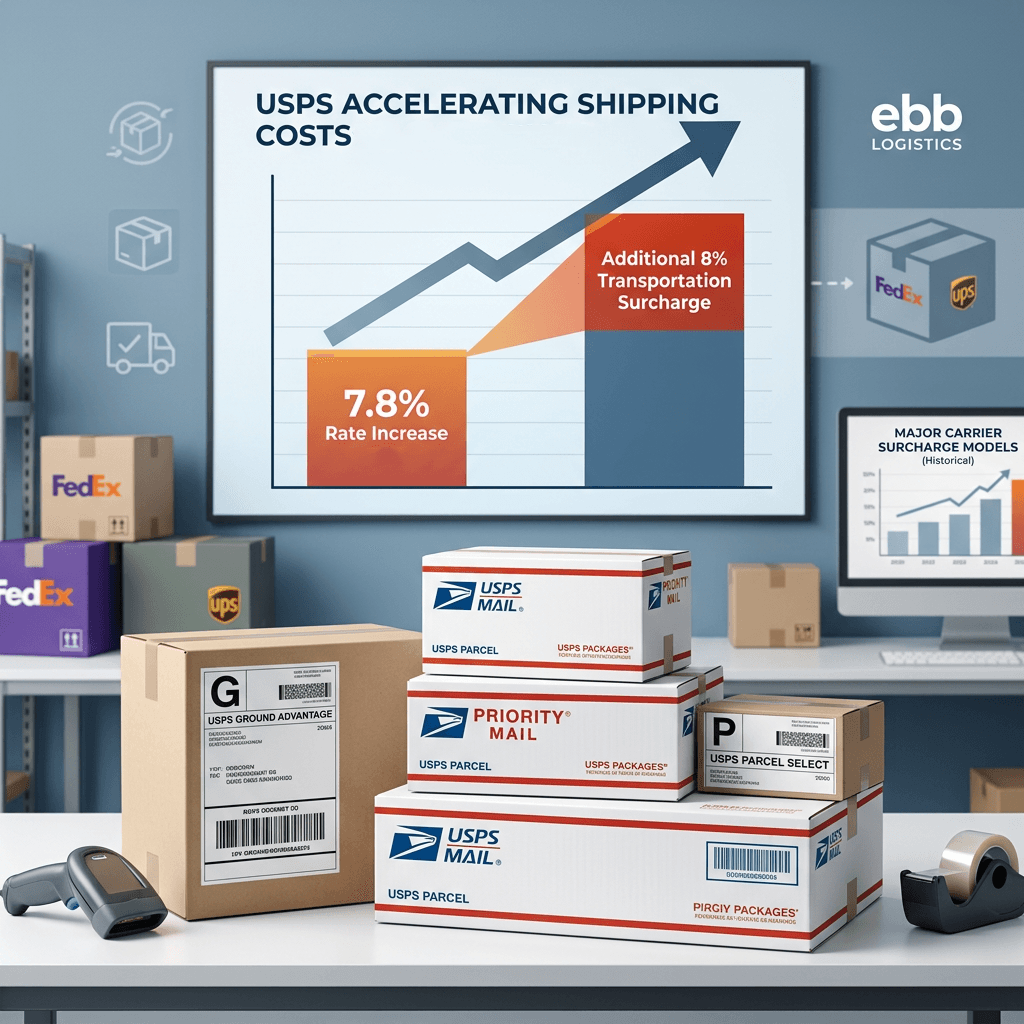
- Combined impact of GRI and surcharge is near 16% on many shipments
- Cost exposure varies by zone. Long-distance lanes see higher impact
- Budgeting models that assume USPS stability will understate true spend
- Carrier diversification and contract controls are now more critical
This is the first time in its history that the USPS has introduced an 8% surcharge on key parcel products. This marks a rare, time-limited surcharge by the USPS, bringing its policies more in line with competitors like FedEx and UPS, which have utilized similar fuel and transportation surcharges for years.
Effective: April 26, 2026 – January 17, 2027
What this means for you
Rates will increase for the following services:
- Priority Mail®
- Priority Mail Express®
- USPS Ground Advantage™
- Parcel Select
This change alters how shippers model cost, risk, and carrier mix. Many budgets and contracts still assume USPS as the stable baseline. That assumption is now outdated.
This follows a 7.8 percent rate increase earlier in the year. The combined impact is near 16 percent on many packages. The larger issue is not the percentage. It is the shift in pricing behavior. USPS is no longer a fixed cost anchor. Shippers must treat it as a variable cost carrier and adjust their strategy now.
Source: USPS News
We provided this change back on March 26 in our blog post titled: USPS Introduces First Fuel Surcharge as Cost Pressures Intensify Since then, we have talked to many parcel shippers and have helped develop a solid strategy that now includes diversification and savings.
What This Means for Parcel Shippers
- Financial impact is immediate. A package that cost 9 dollars last year now lands closer to 10.50. At 125 packages per week, that adds to almost $10 thousand dollars increase in annual spend – a material budget variance.
- Cost volatility increases. USPS historically offered predictable pricing. That allowed shippers to use it as a baseline in multi carrier models. That advantage is gone. Weekly fuel movements at private carriers are now mirrored by policy driven changes at USPS.
- Zone sensitivity matters more. Higher zones carry greater transportation cost. The surcharge amplifies that gap. Shippers with national distribution or coastal to inland flows will see uneven cost pressure.
- Contract risk increases. Many agreements and pricing models assume USPS as a fallback option. If that option becomes more expensive and less predictable, negotiating leverage weakens. Carriers can push pricing with less resistance.
- Operational decisions are affected. Mode selection, service level, and fulfillment routing now require updated cost logic. Decisions based on outdated USPS assumptions will drive margin erosion.
What Shippers Should Do Next
- Audit USPS volume by zone and service level. Identify where cost impact is highest
- Recalculate your total landed cost. Include all surcharges and accessorials
- Model the surcharge as permanent. Do not rely on the stated end date
- Reevaluate carrier mix. Shift volume where cost and service justify it
- Review packaging and dimensional profiles. Reduce exposure to higher cost tiers
- Update internal pricing models and customer quotes to reflect current costs
Call to Action
If you have not recalculated your carrier strategy, you are likely overpaying. Send us several weeks of your invoices and your current carrier agreements and we will complete a no obligation analysis and show where costs are misaligned and how we can help. The longer this sits, the more margin you lose.