
Resources
Carrier rate and surcharge announcements, the industry news that moves them, and analysis from people who priced these agreements inside the carriers. Each one explains what the change could mean for your shipping costs.
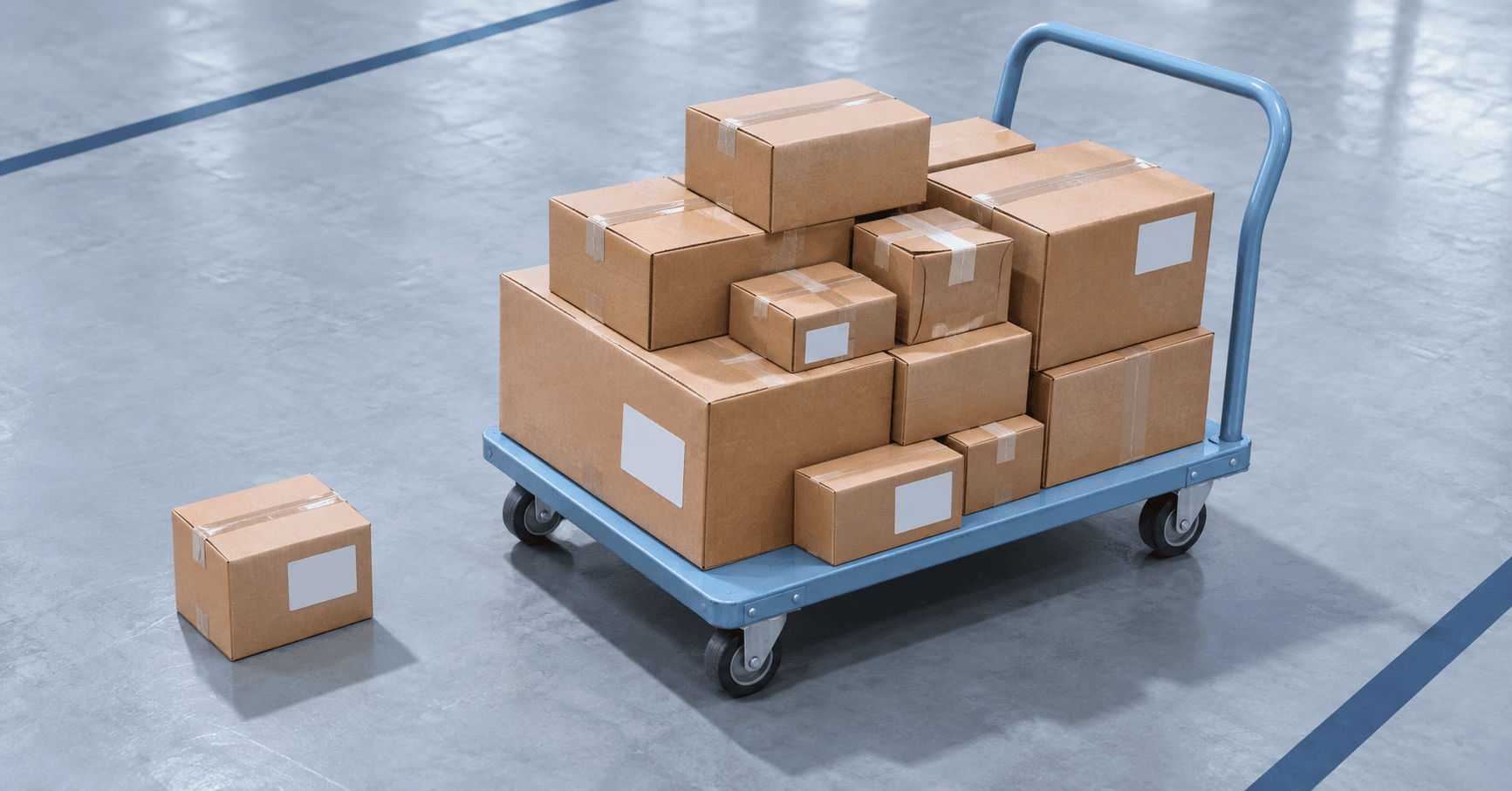
Why shipping gets cheaper with volume, and when it does not
Shipping volume discounts exist because more packages can lower a carrier’s cost per package when they share pickups, routes and capacity. UPS and FedEx price that through account discounts and negotiated incentives tied to spend. But volume alone tells you less than it seems: a 55% discount can earn 37.3% on one package and 6.0% on another.
Read it Parcel
GOFO fuel surcharge: the 4% rate, what it applies to and when it ends
GOFO’s fuel surcharge is a flat 4% of base delivery rates, nationwide, from October 26, 2026. It stays while the U.S. diesel price is above GOFO’s August 2026 baseline of $5.46 a gallon. How it differs from the weekly indexed surcharges at UPS, FedEx and OnTrac, and what to check on a GOFO invoice.
 UPS
Shipping insurance vs declared value: what UPS, FedEx and USPS actually cover
Declared value raises a carrier’s liability limit; it is not insurance. UPS and FedEx include $100 per package, and charge from $4.95 or $5.10 to declare more. It pays only when the carrier is at fault and you can prove the loss. Insurance pays on the loss itself. What each costs, what each covers, and how to decide.
 Freight
FOB shipping point vs FOB destination: freight terms and the bill of lading
FOB shipping point means the buyer bears the risk once the goods are handed to the carrier; FOB destination means the seller bears it until delivery. Who pays the carrier is a separate choice, set by the freight terms on the bill of lading. How the two combine, who files a damage claim, and what a bill of lading has to say.
 UPS
UPS surge fee 2026: Surge Emergency Fee rates by lane
The UPS surge fee, which UPS calls the Surge Emergency Fee, is a charge on international shipments by pound or by package, set by lane. As of October 15, 2026 it runs from $0.23 a pound on Canada and Latin America imports to $1.50 on UAE shipments, with fuel on top. The current table, worked examples, and why a standard discount does not reach it.
 UPS
What is UPS SurePost? UPS Ground Saver explained
UPS SurePost is now called UPS Ground Saver. It is UPS’s economy residential service: UPS carries the package through its ground network and either UPS or the Postal Service makes the final delivery, typically one to two business days slower than UPS Ground. How it works, how it compares with Ground, and what it costs.
 FedEx
What does a FedEx delivery exception mean?
A FedEx delivery exception means the package has been temporarily delayed by something outside the normal delivery process, such as weather, an address problem or no one available to sign. It does not necessarily mean the package will arrive late. What to check, what each situation calls for, and when to contact FedEx or the sender.
 OnTrac
 shipping rates, surcharges and cost guides
OnTrac’s 2026 list rates by weight and zone, the surcharges that sit on top of them, and our guides to OnTrac’s weekly fuel surcharge, its holiday demand surcharges and how its total cost compares with UPS.
 OnTrac
 fuel surcharge: current rate and calculation
OnTrac’s fuel surcharge for November 2 to 8, 2026 is 27.00% on the national schedule and 29.50% on the West Coast schedule. It is reset weekly from diesel prices and applied to the net package rate plus applicable fees and surcharges. Which schedule applies, and a worked invoice.
 OnTrac
 peak and demand surcharges: 2026–2027
OnTrac’s holiday peak surcharges, which it labels demand surcharges, run from September 26, 2026 to January 15, 2027: $1.00 on residential packages from October 24, $11.00 on additional handling, $110.00 on large packages and $595.00 on over-limit packages. What they add to a standard invoice.
 UPS
OnTrac vs. UPS: shipping costs and surcharges
OnTrac’s 2026 list rates are within a few percent of UPS Ground’s in every weight and zone. In our published-rate examples OnTrac comes out up to about 2% cheaper on residential parcels, mostly from its lower fuel percentage, much cheaper on packages that trigger additional handling by weight, and slightly dearer on those that trigger it by dimension. With negotiated rates, the answer depends on the discounts each carrier gives you.
 UPS
UPS fuel surcharge discount: how a fuel reduction works and what to negotiate
A UPS fuel reduction is a term in your agreement that lowers the fuel surcharge UPS publishes each week, commonly as a percentage off it, a cap, or a lower table. Many shippers mistake lower fuel dollars for a negotiated fuel discount. How to tell, what each kind of concession is worth as fuel moves, and how to check it is billed.
 FedEx
FedEx fuel surcharge this week: rates, history and calculation
The FedEx fuel surcharge for the week of November 2, 2026 is 29.25% on FedEx Ground and Home Delivery and 33.25% on domestic package services such as FedEx Express. FedEx resets it every Monday from published diesel and jet fuel prices and charges it on your net rate plus listed surcharges.
 UPS
UPS fuel surcharge: how it is calculated and what your business pays
The UPS fuel surcharge is a weekly percentage added to your transportation charges and fuel-eligible accessorials: 30.25% for UPS Ground and 34.25% for domestic Air in the week of November 2, 2026. How UPS sets it, what it is charged on, a worked example, and how to check it against your agreement.
 USPS
USPS Ground Advantage commercial rates: current prices by weight and zone
USPS Ground Advantage commercial prices by weight and zone. With the holiday adjustment in force through January 16, 2027, a package under 1 lb to zone 1 is $7.33 and 1 lb is $8.01. The prices already include USPS’s temporary 8% increase. Cubic pricing, the July 2026 ounce change and what is scheduled for 2027.
 USPS
Does USPS provide photo proof of delivery? What USPS offers instead
Not yet. USPS has not announced customer access to delivery photos; in February 2026 it confirmed a field test and said the images were unavailable to customers. What USPS offers instead, how to request a signed proof of delivery, and when a signature is worth paying for.
 OnTrac
Parcel audit vs rate audit vs contract optimization: what each one solves
Three different questions about a UPS or FedEx bill: was it billed correctly, were your agreed terms applied, and are the terms themselves competitive? A parcel audit answers the first, a rate audit the second, contract optimization the third. Accurate invoices do not prove competitive pricing, and a good contract still needs checking on every invoice.
 USPS
USPS return to origin explained: what it means and who pays
Return to origin means the Postal Service could not deliver a package and is sending it back to the sender. Priority Mail and USPS Ground Advantage come back at no charge; Parcel Select comes back at the Ground Advantage commercial price plus a $6.00 standard fee. The original postage is usually not refunded. The reasons, the costs to a commercial shipper, and how to intercept or prevent a return.
 Freight
NMFC lookup and freight class: how to find the right classification
An NMFC item number tells the carrier what the freight is; the freight class tells it how to rate it. The full classification is licensed by the NMFTA through ClassIT+, from $371 a seat a year. How to find your item, how density sets the class for most of them, what a wrong code costs on a FedEx Freight bill, and how to dispute a reclassification within 180 days of the bill.
 Parcel
Zone skipping explained: when it reduces parcel shipping costs
Zone skipping consolidates parcels bound for one region, moves them there as freight, and hands them to a parcel carrier or the Postal Service close to the customer, so each package is priced from a nearby origin. A 5 lb FedEx Ground package lists at $21.69 to zone 8 and $14.06 to zone 2. Whether that $7.63 pays for the truck depends on how many packages share it.
 UPS
UPS and FedEx dimensional weight history: divisors and rule changes, 2007 to 2026
Two kinds of change made dimensional weight what it is: which packages it applies to, and the divisor. The domestic divisor fell from 194 to 166 in January 2011 and to 139 in 2017; Ground packages below three cubic feet became subject to it in December 2014 and January 2015. A dated timeline for both carriers, and what each step did to the same box.
 UPS
UPS and FedEx general rate increase history, 2020 to 2027
UPS and FedEx announced matching general rate increases for eight rate years: 4.9% in 2020 and 2021, 5.9% in 2022, 6.9% in 2023, and 5.9% in 2024, 2025, 2026 and 2027. The UPS 2027 increase takes effect December 21, 2026 and FedEx’s January 4, 2027. Compounding the announced averages gives an illustrative 56.7% since the end of 2019. The year-by-year table, the dates, and why a shipper’s actual increase is rarely the announced average.
 DHL
DHL Fuel Surcharges: How to Check the Percentage and Your Invoice
DHL runs two different fuel surcharges. DHL Express charges a weekly percentage of transportation and related surcharges, 37.50% on exports for October 19 to 25, 2026. DHL eCommerce charges a monthly amount per pound, $0.30 domestic for October 2026. How each is set, and how to check it on an invoice.
 FedEx
FedEx 2027 Rate Changes: Calculate the Impact on Your Shipment Mix
FedEx announced an average 5.9% list rate increase for January 4, 2027, but no shipment moves by the average. Ground rates rise 5.28% to 7.20% by weight and zone, 6.49% on 1 to 5 lb packages, while Express Saver rises 3.09%. A sample mix of 1,000 weekly shipments rises 6.37%. The dated changes, the surcharge table and how to price your own mix.
 UPS
UPS and FedEx minimum net charges: why a bigger discount may not save money
UPS and FedEx agreements bill the greater of your discounted rate or a minimum net charge. On a $20 list package, a 65% discount gives $7, but an $11 minimum bills $11, and a 70% discount still bills $11. How the floor is set, which packages it governs, and why the minimum is often worth more to negotiate than the discount.
Review your agreement before rates change.
Send your agreement for a review of the terms that affect your shipping costs.
Or call 888-356-4421
Free, and no obligation. A written evaluation back inside 48 hours. No fee unless we find documented savings. How we handle your documents
- Your current agreement, any carrier
- One recent invoice, if you have one
- A written evaluation back inside 48 hours